Regulatory Ripples: How Swiss Oversight Shapes the Sync Between Live Dealer Tech and Slot Payout Algorithms
Blake Lang · Sep 13, 2026

Regulatory Ripples: How Swiss Oversight Shapes the Sync Between Live Dealer Tech and Slot Payout Algorithms
Swiss regulatory structures have long influenced how operators align live dealer platforms with slot payout mechanisms, and observers note that these frameworks continue to evolve in measurable ways. The Federal Act on Games of Chance and Casinos sets core standards for both real-time dealer streams and algorithmic slot functions, requiring synchronized compliance checks that cover latency controls, random number generation integrity, and payout transparency across integrated systems.
Core Swiss Oversight Mechanisms
Authorities enforce these rules through regular audits that examine data flows between live tables and slot servers, and research indicates that operators must maintain unified logging protocols to demonstrate fairness. Data shows that certification bodies require identical testing intervals for dealer authentication modules and slot randomizers, which forces companies to build shared validation layers rather than separate silos. Those who have reviewed licensing applications observe that this approach reduces discrepancies in reported outcomes while maintaining distinct game categories.
Live Dealer Technology Under Regulation
Live dealer feeds rely on high-bandwidth video encoding and player interaction interfaces that Swiss rules subject to strict uptime and fairness benchmarks. Experts have documented how oversight bodies mandate encryption standards that must match the security applied to slot backend systems, creating parallel technical requirements. Figures from industry reports reveal that any delay in dealer stream synchronization triggers additional reporting obligations, which in turn affects how operators configure their overall platform architecture.
Slot Payout Algorithms and Compliance Layers
Slot payout algorithms face direct scrutiny through return-to-player verification processes and continuous monitoring mandates, and these procedures increasingly intersect with live dealer oversight. Studies found that Swiss regulators require payout percentage calculations to incorporate cross-game data sets when operators offer bundled experiences, which means algorithms must account for live table results in certain compliance reports. This integration forces developers to design modular code that can pull verified data from both dealer and slot environments without creating conflicts in audit trails.
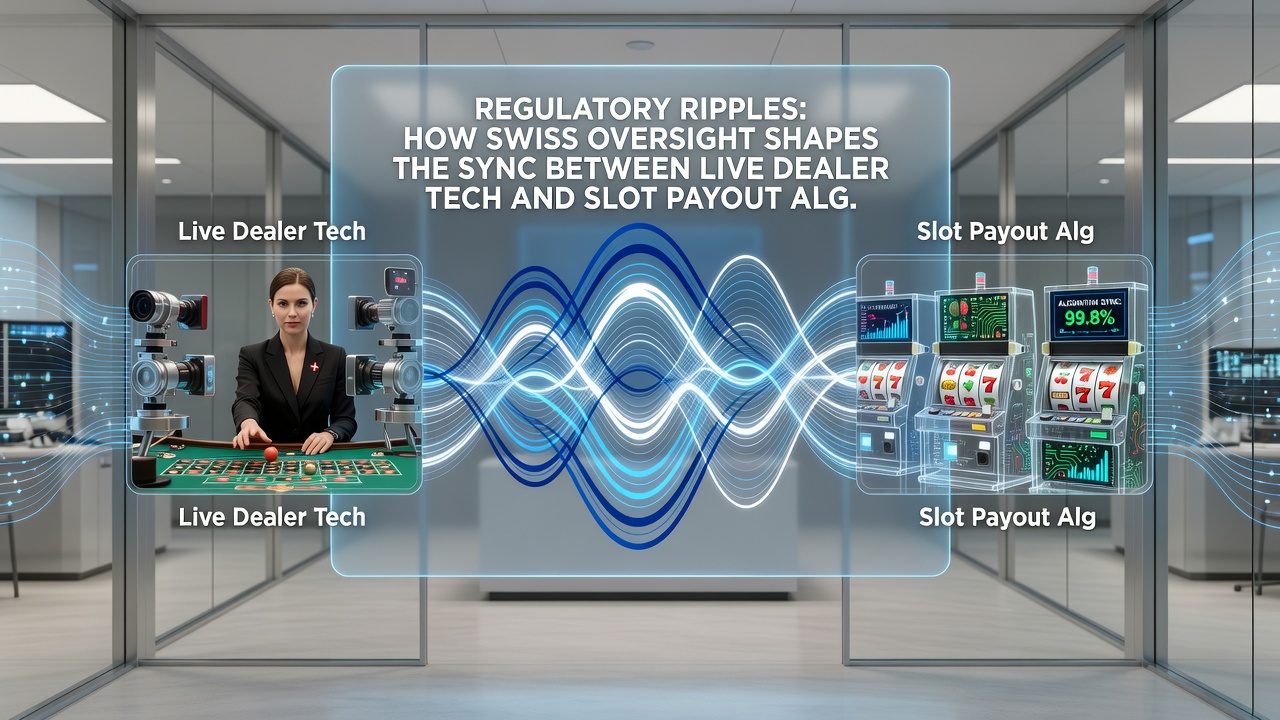
One documented case involved an operator that adjusted its slot variance models after regulators flagged inconsistencies with live dealer session logs, and the adjustment process required coordinated updates across both systems. The reality is that such cases illustrate how oversight pushes technical teams to treat live and slot components as interdependent rather than isolated modules.
Synchronization Requirements and Technical Impacts
Swiss guidelines specify that any shared infrastructure supporting both live dealer and slot functions must undergo joint stress testing, and this rule has prompted companies to adopt unified timestamping and logging standards. According to Swiss Federal Gaming Board documentation, operators must demonstrate that payout decisions remain independent yet auditable within a common framework. Researchers discovered that these demands have accelerated adoption of API gateways capable of routing compliance data between dealer interfaces and slot engines in real time.
Additional rules address player fund segregation and transaction reconciliation, which further ties the two game types together when they share wallet systems. Observers note that September 2026 marks the scheduled rollout of updated technical circulars that will expand data-sharing requirements between live and slot environments, and industry groups expect these changes to standardize certain encryption handshakes across platforms.
Broader Industry Effects and Reporting Standards
Industry associations have compiled statistics showing increased investment in cross-functional compliance teams since the last major framework revision, and this trend aligns with requirements for unified risk assessments. A report from the Australian Gambling Research Centre highlighted similar patterns in other regulated markets, where synchronization mandates led to measurable reductions in audit discrepancies. Swiss operators therefore allocate resources toward monitoring tools that track both dealer video integrity and slot hit frequency within single dashboards.
These developments have also influenced software vendors, who now market middleware solutions designed to bridge live and slot systems under Swiss licensing conditions. Data indicates that vendors who fail to meet joint certification criteria lose access to certain distribution channels, which reinforces the market preference for integrated architectures.
Conclusion
Swiss oversight continues to drive measurable alignment between live dealer technology and slot payout algorithms through shared compliance standards, audit protocols, and reporting obligations. Operators respond by implementing unified technical layers that satisfy regulatory demands while preserving game-specific functions. As the September 2026 circulars approach implementation, further refinements in data synchronization practices remain likely, and industry participants track these shifts through ongoing certification processes.